
Marjorie Taylor Greene hostile in testimony over eligibility
Marjorie Taylor Greene hostile in testimony over eligibility
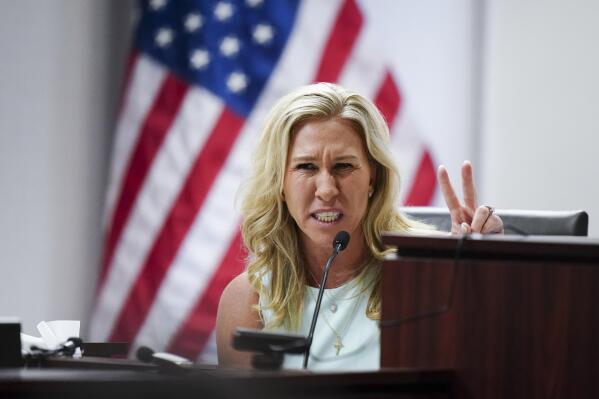
U.S. Rep. Marjorie Taylor Greene speaks during a hearing, Friday, April 22, 2022, in Atlanta. Greene is appearing at a hearing Friday in Atlanta in a challenge filed by voters who say she shouldn’t be allowed to seek reelection because she helped facilitate the attack on the Capitol that disrupted certification of Joe Biden’s presidential victory.(AP Photo/John Bazemore, Pool)

U.S. Rep. Marjorie Taylor Greene sits in the courtroom, Friday, April 22, 2022, in Atlanta. Rep. Greene is appearing at a hearing Friday in Atlanta in a challenge filed by voters who say she shouldn’t be allowed to seek reelection because she helped facilitate the attack on the Capitol that disrupted certification of Joe Biden’s presidential victory.(AP Photo/John Bazemore, Pool)

U.S. Rep. Marjorie Taylor Greene enters the courtroom, Friday, April 22, 2022, in Atlanta. Rep. Greene is appearing at the hearing Friday in Atlanta in a challenge filed by voters who say she shouldn’t be allowed to seek reelection because she helped facilitate the attack on the Capitol that disrupted certification of Joe Biden’s presidential victory.(AP Photo/John Bazemore, Pool)

U.S. Rep. Marjorie Taylor Greene sits in the courtroom, Friday, April 22, 2022, in Atlanta. Rep. Greene is appearing at a hearing Friday in Atlanta in a challenge filed by voters who say she shouldn’t be allowed to seek reelection because she helped facilitate the attack on the Capitol that disrupted certification of Joe Biden’s presidential victory.(AP Photo/John Bazemore, Pool)

U.S. Rep. Marjorie Taylor Greene sits in the courtroom, Friday, April 22, 2022, in Atlanta. Rep. Greene is appearing at a hearing Friday in Atlanta in a challenge filed by voters who say she shouldn’t be allowed to seek reelection because she helped facilitate the attack on the Capitol that disrupted certification of Joe Biden’s presidential victory.(AP Photo/John Bazemore, Pool)

Republican Rep. Matt Gaetz, R-Fla., walks in the courtroom ahead of U.S. Rep. Marjorie Taylor Greene hearing, Friday, April 22, 2022, in Atlanta. Taylor Greene is expected to appear at a hearing Friday in Atlanta in a challenge filed by voters who say she shouldn’t be allowed to seek reelection because she helped facilitate the attack on the Capitol that disrupted certification of Joe Biden’s presidential victory. (AP Photo/John Bazemore, Pool)

Republican Rep. Matt Gaetz, R-Fla., sits in the courtroom ahead of U.S. Rep. Marjorie Taylor Greene hearing, Friday, April 22, 2022, in Atlanta. Taylor Greene is expected to appear at a hearing Friday in Atlanta in a challenge filed by voters who say she shouldn’t be allowed to seek reelection because she helped facilitate the attack on the Capitol that disrupted certification of Joe Biden’s presidential victory. (AP Photo/John Bazemore, Pool)

U.S. Rep. Marjorie Taylor Greene enters the courtroom, Friday, April 22, 2022, in Atlanta.Rep. Greene is appearing at the hearing Friday in Atlanta in a challenge filed by voters who say she shouldn’t be allowed to seek reelection because she helped facilitate the attack on the Capitol that disrupted certification of Joe Biden’s presidential victory.(AP Photo/John Bazemore, Pool)

Judge Charles Beaudrot speaks to participants in the courtroom, Friday, April 22, 2022, in Atlanta. U.S. Rep. Marjorie Taylor Greene is appearing at a hearing Friday in Atlanta in a challenge filed by voters who say she shouldn’t be allowed to seek reelection because she helped facilitate the attack on the Capitol that disrupted certification of Joe Biden’s presidential victory.(AP Photo/John Bazemore, Pool)

Republican Rep. Matt Gaetz, R-Fla., sits in the courtroom ahead of U.S. Rep. Marjorie Taylor Greene hearing, Friday, April 22, 2022, in Atlanta. Taylor Greene is appearing at a hearing Friday in Atlanta in a challenge filed by voters who say she shouldn’t be allowed to seek reelection because she helped facilitate the attack on the Capitol that disrupted certification of Joe Biden’s presidential victory. (AP Photo/John Bazemore, Pool)

Judge Charles Beaudrot listens to arguments in the courtroom, Friday, April 22, 2022, in Atlanta. U.S. Rep. Marjorie Taylor Greene is appearing at a hearing Friday in Atlanta in a challenge filed by voters who say she shouldn’t be allowed to seek reelection because she helped facilitate the attack on the Capitol that disrupted certification of Joe Biden’s presidential victory.(AP Photo/John Bazemore, Pool)
U.S. Rep. Marjorie Taylor Greene speaks during a hearing, Friday, April 22, 2022, in Atlanta. Greene is appearing at a hearing Friday in Atlanta in a challenge filed by voters who say she shouldn’t be allowed to seek reelection because she helped facilitate the attack on the Capitol that disrupted certification of Joe Biden’s presidential victory.(AP Photo/John Bazemore, Pool)
U.S. Rep. Marjorie Taylor Greene speaks during a hearing, Friday, April 22, 2022, in Atlanta. Greene is appearing at a hearing Friday in Atlanta in a challenge filed by voters who say she shouldn’t be allowed to seek reelection because she helped facilitate the attack on the Capitol that disrupted certification of Joe Biden’s presidential victory.(AP Photo/John Bazemore, Pool)
U.S. Rep. Marjorie Taylor Greene sits in the courtroom, Friday, April 22, 2022, in Atlanta. Rep. Greene is appearing at a hearing Friday in Atlanta in a challenge filed by voters who say she shouldn’t be allowed to seek reelection because she helped facilitate the attack on the Capitol that disrupted certification of Joe Biden’s presidential victory.(AP Photo/John Bazemore, Pool)
U.S. Rep. Marjorie Taylor Greene sits in the courtroom, Friday, April 22, 2022, in Atlanta. Rep. Greene is appearing at a hearing Friday in Atlanta in a challenge filed by voters who say she shouldn’t be allowed to seek reelection because she helped facilitate the attack on the Capitol that disrupted certification of Joe Biden’s presidential victory.(AP Photo/John Bazemore, Pool)
U.S. Rep. Marjorie Taylor Greene enters the courtroom, Friday, April 22, 2022, in Atlanta. Rep. Greene is appearing at the hearing Friday in Atlanta in a challenge filed by voters who say she shouldn’t be allowed to seek reelection because she helped facilitate the attack on the Capitol that disrupted certification of Joe Biden’s presidential victory.(AP Photo/John Bazemore, Pool)
U.S. Rep. Marjorie Taylor Greene enters the courtroom, Friday, April 22, 2022, in Atlanta. Rep. Greene is appearing at the hearing Friday in Atlanta in a challenge filed by voters who say she shouldn’t be allowed to seek reelection because she helped facilitate the attack on the Capitol that disrupted certification of Joe Biden’s presidential victory.(AP Photo/John Bazemore, Pool)
U.S. Rep. Marjorie Taylor Greene sits in the courtroom, Friday, April 22, 2022, in Atlanta. Rep. Greene is appearing at a hearing Friday in Atlanta in a challenge filed by voters who say she shouldn’t be allowed to seek reelection because she helped facilitate the attack on the Capitol that disrupted certification of Joe Biden’s presidential victory.(AP Photo/John Bazemore, Pool)
U.S. Rep. Marjorie Taylor Greene sits in the courtroom, Friday, April 22, 2022, in Atlanta. Rep. Greene is appearing at a hearing Friday in Atlanta in a challenge filed by voters who say she shouldn’t be allowed to seek reelection because she helped facilitate the attack on the Capitol that disrupted certification of Joe Biden’s presidential victory.(AP Photo/John Bazemore, Pool)
U.S. Rep. Marjorie Taylor Greene sits in the courtroom, Friday, April 22, 2022, in Atlanta. Rep. Greene is appearing at a hearing Friday in Atlanta in a challenge filed by voters who say she shouldn’t be allowed to seek reelection because she helped facilitate the attack on the Capitol that disrupted certification of Joe Biden’s presidential victory.(AP Photo/John Bazemore, Pool)
U.S. Rep. Marjorie Taylor Greene sits in the courtroom, Friday, April 22, 2022, in Atlanta. Rep. Greene is appearing at a hearing Friday in Atlanta in a challenge filed by voters who say she shouldn’t be allowed to seek reelection because she helped facilitate the attack on the Capitol that disrupted certification of Joe Biden’s presidential victory.(AP Photo/John Bazemore, Pool)
Republican Rep. Matt Gaetz, R-Fla., walks in the courtroom ahead of U.S. Rep. Marjorie Taylor Greene hearing, Friday, April 22, 2022, in Atlanta. Taylor Greene is expected to appear at a hearing Friday in Atlanta in a challenge filed by voters who say she shouldn’t be allowed to seek reelection because she helped facilitate the attack on the Capitol that disrupted certification of Joe Biden’s presidential victory. (AP Photo/John Bazemore, Pool)
Republican Rep. Matt Gaetz, R-Fla., walks in the courtroom ahead of U.S. Rep. Marjorie Taylor Greene hearing, Friday, April 22, 2022, in Atlanta. Taylor Greene is expected to appear at a hearing Friday in Atlanta in a challenge filed by voters who say she shouldn’t be allowed to seek reelection because she helped facilitate the attack on the Capitol that disrupted certification of Joe Biden’s presidential victory. (AP Photo/John Bazemore, Pool)
Republican Rep. Matt Gaetz, R-Fla., sits in the courtroom ahead of U.S. Rep. Marjorie Taylor Greene hearing, Friday, April 22, 2022, in Atlanta. Taylor Greene is expected to appear at a hearing Friday in Atlanta in a challenge filed by voters who say she shouldn’t be allowed to seek reelection because she helped facilitate the attack on the Capitol that disrupted certification of Joe Biden’s presidential victory. (AP Photo/John Bazemore, Pool)
Republican Rep. Matt Gaetz, R-Fla., sits in the courtroom ahead of U.S. Rep. Marjorie Taylor Greene hearing, Friday, April 22, 2022, in Atlanta. Taylor Greene is expected to appear at a hearing Friday in Atlanta in a challenge filed by voters who say she shouldn’t be allowed to seek reelection because she helped facilitate the attack on the Capitol that disrupted certification of Joe Biden’s presidential victory. (AP Photo/John Bazemore, Pool)
U.S. Rep. Marjorie Taylor Greene enters the courtroom, Friday, April 22, 2022, in Atlanta.Rep. Greene is appearing at the hearing Friday in Atlanta in a challenge filed by voters who say she shouldn’t be allowed to seek reelection because she helped facilitate the attack on the Capitol that disrupted certification of Joe Biden’s presidential victory.(AP Photo/John Bazemore, Pool)
U.S. Rep. Marjorie Taylor Greene enters the courtroom, Friday, April 22, 2022, in Atlanta.Rep. Greene is appearing at the hearing Friday in Atlanta in a challenge filed by voters who say she shouldn’t be allowed to seek reelection because she helped facilitate the attack on the Capitol that disrupted certification of Joe Biden’s presidential victory.(AP Photo/John Bazemore, Pool)
Judge Charles Beaudrot speaks to participants in the courtroom, Friday, April 22, 2022, in Atlanta. U.S. Rep. Marjorie Taylor Greene is appearing at a hearing Friday in Atlanta in a challenge filed by voters who say she shouldn’t be allowed to seek reelection because she helped facilitate the attack on the Capitol that disrupted certification of Joe Biden’s presidential victory.(AP Photo/John Bazemore, Pool)
Judge Charles Beaudrot speaks to participants in the courtroom, Friday, April 22, 2022, in Atlanta. U.S. Rep. Marjorie Taylor Greene is appearing at a hearing Friday in Atlanta in a challenge filed by voters who say she shouldn’t be allowed to seek reelection because she helped facilitate the attack on the Capitol that disrupted certification of Joe Biden’s presidential victory.(AP Photo/John Bazemore, Pool)
Republican Rep. Matt Gaetz, R-Fla., sits in the courtroom ahead of U.S. Rep. Marjorie Taylor Greene hearing, Friday, April 22, 2022, in Atlanta. Taylor Greene is appearing at a hearing Friday in Atlanta in a challenge filed by voters who say she shouldn’t be allowed to seek reelection because she helped facilitate the attack on the Capitol that disrupted certification of Joe Biden’s presidential victory. (AP Photo/John Bazemore, Pool)
Republican Rep. Matt Gaetz, R-Fla., sits in the courtroom ahead of U.S. Rep. Marjorie Taylor Greene hearing, Friday, April 22, 2022, in Atlanta. Taylor Greene is appearing at a hearing Friday in Atlanta in a challenge filed by voters who say she shouldn’t be allowed to seek reelection because she helped facilitate the attack on the Capitol that disrupted certification of Joe Biden’s presidential victory. (AP Photo/John Bazemore, Pool)
Judge Charles Beaudrot listens to arguments in the courtroom, Friday, April 22, 2022, in Atlanta. U.S. Rep. Marjorie Taylor Greene is appearing at a hearing Friday in Atlanta in a challenge filed by voters who say she shouldn’t be allowed to seek reelection because she helped facilitate the attack on the Capitol that disrupted certification of Joe Biden’s presidential victory.(AP Photo/John Bazemore, Pool)
Judge Charles Beaudrot listens to arguments in the courtroom, Friday, April 22, 2022, in Atlanta. U.S. Rep. Marjorie Taylor Greene is appearing at a hearing Friday in Atlanta in a challenge filed by voters who say she shouldn’t be allowed to seek reelection because she helped facilitate the attack on the Capitol that disrupted certification of Joe Biden’s presidential victory.(AP Photo/John Bazemore, Pool)

ATLANTA (AP) — U.S. Rep. Marjorie Taylor Greene was hostile during testimony Friday in a hearing on her eligibility to run for reelection, saying she did not remember liking and making various social media posts surrounding the attack on the U.S. Capitol last year and accusing an opposing lawyer of using chopped videos and twisting her words.
Voters in the Georgia congresswoman’s district have said Greene helped facilitate the Jan. 6, 2021, insurrection that disrupted certification of President Joe Biden’s victory, making her ineligible for reelection under a rarely cited section of the 14th Amendment dealing with “insurrection or rebellion.”
But Greene — who, the day before the Capitol riot, proclaimed on TV that this is “our 1776 moment” — testified that she’s never endorsed violence.
Greene is set to appear on the Republican ballot for Georgia’s May 24 primary and has been endorsed by former President Donald Trump. The administrative law judge who oversaw the hearing must present his findings to Republican Secretary of State Brad Raffensperger, who will then make the ultimate determination over whether Greene is qualified.
Greene has repeatedly denied aiding or engaging in an insurrection and has filed a lawsuit alleging that the law the voters are using to challenge her eligibility is itself unconstitutional.
But Ron Fein, a lawyer for the voters who filed the challenge, said Greene took an oath and then broke it by engaging in an insurrection. While Greene wasn’t on the steps of the Capitol, she nevertheless played an important role in stoking Republican fury ahead of the attack, Fein said.
Unlike the Civil War and other insurrections that involved military uniforms and tactics, he said, “The leaders of this insurrection were among us, on Facebook, on Twitter, on corners of social media that would make your stomach hurt.”
Andrew Celli, a lawyer for the voters, questioned Greene about posts on her social media accounts. She repeatedly responded, “I don’t recall,” or “I don’t remember.”
When asked about the fact that her Facebook account had, in 2019, “liked” a post calling for Democratic House Speaker Nancy Pelosi to be shot in the head, Greene said she had no memory of that and said someone else could have been responsible.
Whenever Celli suggested that she’d endorsed the use of violence to interrupt the certification of the electoral votes, Greene asserted she doesn’t support violence and was encouraging peaceful protest.
Celli played a clip of an interview Greene did Jan. 5, 2021, in which she said this is “our 1776 moment.” When Celli asked if she was aware some Trump supporters used that reference as a call to violence, Greene said that wasn’t her intention and that she was talking about her plans to object to the certification of electoral votes.
“I was talking about the courage to object,” she said.
Celli appeared to grow frustrated at times when she didn’t directly answer his questions and accused him of was speculating.
“Ms. Greene, I’m just asking questions,” he said.
“I’m just answering,” she responded.
Administrative Law Judge Charles Beaudrot sometimes seemed exasperated by repeated rephrasing of questions and at times told Celli to move on. He also repeatedly admonished Greene supporters for clapping or cheering during the proceedings.
James Bopp, a lawyer for Greene, said his client “did not engage in the attack on the Capitol,” and the challengers are making a very serious charge with significant ramifications.
“They want to deny the right to vote to the thousands of people living in the 14th District of Georgia by removing Greene from the ballot,” he said.
At the time of the riot, Greene was in a dark hallway at the Capitol urging people via social media to be safe and remain calm, he said.
“Rep. Greene was a victim of this attack,” Bopp said, adding that she believed her life could be in danger.
Bopp said that Greene was engaging in protected political speech. He also argued that the administrative hearing process is meant to address basic qualification questions, not to evaluate major constitutional and federal claims.
Dozens of Greene supporters attended the hearing, including U.S. Rep. Matt Gaetz, a Florida Republican and staunch Greene ally.
The challenge to Greene’s eligibility to run for reelection was filed by five voters who live in her district, and the procedure for such a challenge is outlined in Georgia law.
The law says any voter who’s eligible to vote for a candidate can challenge that candidate’s qualifications by filing a written complaint. The secretary of state then has to request a hearing before an administrative law judge.
Beaudrot asked both sides to submit briefs by midnight Thursday, and said he would try to make a decision within a week after that.
Once he submits findings, Raffensperger will be tasked with deciding the eligibility of Greene, a Trump loyalist, as he faces a tough primary challenge from a Trump-endorsed candidate. Raffensperger attracted Trump’s wrath shortly after the 2020 election when he refused to take steps to overturn Trump’s narrow loss in the state.
The 14th Amendment says no one can serve in Congress “who, having previously taken an oath, as a member of Congress ... to support the Constitution of the United States, shall have engaged in insurrection or rebellion against the same.” Ratified shortly after the Civil War, it aimed to keep representatives who had fought for the Confederacy from returning to Congress.
U.S. District Judge Amy Totenberg in Atlanta on Monday declined a request from Greene to halt the challenge process. Greene is appealing that ruling.
The Georgia complaint was filed on the voters’ behalf by Free Speech for People, a national election and campaign finance reform group.
The group filed similar challenges on behalf of voters in Arizona, where a judge on Friday ruled to keep three Republicans on the ballot, and in North Carolina against Republican U.S. Rep. Madison Cawthorn, who spoke at the rally that preceded the riot.
A federal judge last month blocked the challenge against Cawthorn, writing that laws approved by Congress in 1872 and 1898 mean the 14th Amendment section can’t apply to current House members.
___
Associated Press writer Gary Robertson in Raleigh, North Carolina, contributed reporting.
